How to Clean a Nugget Ice Maker Properly
Learn how to clean a nugget ice maker, including descaling, rinsing, cleaning schedules, and everyday maintenance for fresher chewable ice.
We may earn money or products from the companies mentioned in this post.
That first glass of soft, chewable nugget ice is the whole reason you bought the machine. But if the ice starts tasting flat, the bin smells musty, or production slows down, it is time to learn how to clean a nugget ice maker properly. These machines continuously move water through small tubes, pumps, and freezing surfaces, so mineral scale and biofilm can build up faster than many owners expect.
A cleaning cycle is not busywork. It protects ice flavor, helps the machine make ice at its rated pace, and may prevent the kind of pump or sensor trouble that turns a countertop convenience into an expensive counter ornament. The right method depends somewhat on your model, but the core process is consistent across GE Profile Opal, GoveeLife, Ecozy, Frigidaire, Silonn, EUHOMY, and most other countertop nugget ice makers.
How to Clean a Nugget Ice Maker in the Right Order
Start with the owner’s manual. That sounds obvious, but cleaning instructions are one area where manufacturers genuinely differ. Some models have a dedicated self-clean button and specify a branded descaling solution. Others permit diluted white vinegar or citric-acid cleaner. A few have removable reservoirs and bins that can be hand-washed, while others keep more of the water path enclosed.
Use the cleaner and dilution ratio approved for your machine whenever possible. Do not assume that a stronger mix will clean better. It can leave an unpleasant taste, create excess foam, or be harder to rinse out of the internal water circuit.
Before touching the machine, turn it off and unplug it. Remove all ice from the bin and discard it. Even if it looks clean, it has been sitting in a humid compartment during the cleaning process. If your maker has a water reservoir, drain it completely. Many countertop units have a drain plug on the bottom or back, so place the machine near a sink and put a shallow pan or towel underneath first.
Next, remove the parts the manual identifies as removable. This often includes the ice basket, scoop, drip tray, and water tank cover. Wash these pieces in warm water with a mild dish soap, then rinse them thoroughly. Do not put parts in the dishwasher unless the manufacturer specifically says they are dishwasher-safe. Heat can warp a bin, lid, or plastic sensor component.
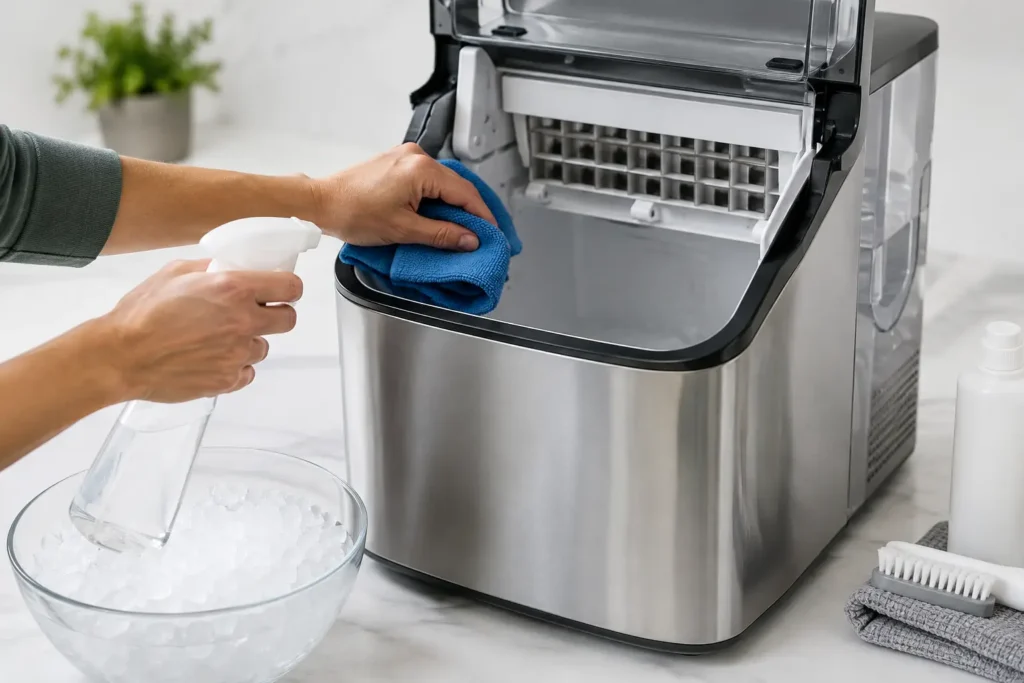
Wipe the interior surfaces you can reach with a soft cloth or non-abrasive sponge. Focus on the bin, the underside of the lid, the water reservoir opening, and any visibly slimy or chalky areas. Avoid abrasive pads, bleach, and heavily scented cleaners. Bleach may be appropriate only when a manufacturer explicitly calls for it, and scented products have no place near ice you plan to chew.
Run the descaling or cleaning cycle
Fill the reservoir with the approved cleaning solution and start the machine’s cleaning cycle. On a model with an automatic clean function, this is usually as simple as holding the Clean button for several seconds. The machine will circulate the solution through the pump and internal tubing, where a cloth cannot reach.
If your nugget ice maker does not have a dedicated cleaning program, follow the manual’s instructions for circulating cleaner. Some models require you to run a standard ice-making cycle with the cleaning mixture, then discard any ice it produces. Never serve or consume ice made during this step.
Let the cycle run its full course. This is one place where impatience works against you. A quick wipe may make the machine look clean, but the hidden water path is where mineral deposits can restrict flow and where residue can affect taste.
Rinse until the water runs clear and neutral
After the cleaning solution drains, refill the reservoir with fresh water and run the rinse cycle recommended by the manufacturer. Drain it and repeat. Most machines need at least two fresh-water rinse cycles, though a strong vinegar smell or any visible suds means you should run another.
Taste is your useful final check. Once the machine is reassembled and has made a fresh batch of ice, discard the first batch. Then try a piece. Clean nugget ice should taste like your water, not vinegar, cleaner, plastic, or last week’s fridge odors.
How Often Should You Clean It?
For most countertop owners, a full cleaning every one to two weeks is the realistic sweet spot. If you use the machine daily, have hard water, or regularly leave it filled between uses, clean it weekly. A household that runs a few batches on weekends can often stretch to every two weeks, provided the reservoir is emptied and dried after use.
Scale is the big variable. Hard water leaves white or gray mineral buildup on the reservoir, evaporator area, and drain surfaces. If you see it, do not wait for the calendar. Clean the machine now. Filtered water can reduce scale, but it does not eliminate the need for regular cleaning.
A deeper clean is also due when you notice any of these signs:
- Ice has a sour, metallic, or stale taste.
- The machine is taking noticeably longer to make a batch.
- The water reservoir or bin has a slippery feel or musty smell.
- Ice comes out smaller, wetter, or less consistent than usual.
- A clean or add-water indicator appears even though the reservoir is full.
Not every production issue is caused by buildup. A warm room, blocked ventilation, or a failing pump can also slow output. But cleaning is the first low-cost troubleshooting step, and it is often the fix.
Self-Cleaning Cycles Help, but They Are Not Hands-Off
Automatic cleaning is a worthwhile feature, particularly for smart-connected machines that can remind you when maintenance is due. Still, a self-cleaning button does not wash the scoop, ice bin, lid, exterior vents, or removable reservoir parts. It also does not magically remove stubborn scale if you only run water through it.
Think of the automatic cycle as the internal part of the job, not the entire job. You still need to drain the machine, clean contact surfaces by hand, and rinse the water system completely. Premium machines may make this process less annoying, but no nugget ice maker is maintenance-free.
Daily Habits That Keep Cleaning Easier
The lowest-effort habit is also the most effective: do not leave old water sitting in the machine for days. If you are leaving town, or if the machine will not be used for more than a day or two, drain the reservoir and leave the lid open long enough for the interior to dry.
Use fresh water rather than topping off water that has been sitting in the tank all week. Keep the scoop clean and store it outside the bin if there is no dedicated holder. Hands, drink residue, and a scoop tossed onto melting ice are easy ways to reintroduce contaminants.
Also remember that most countertop ice bins are insulated, not refrigerated. The ice will slowly melt, return to the reservoir, and get made again. That recirculation is normal, but it is another reason fresh water and routine cleaning matter. If your household goes through ice fast, this is barely noticeable. If you make one late-night drink and leave the machine idle until Friday, drain it afterward.
A Few Cleaning Mistakes Worth Avoiding
Do not use a metal brush, knife, or screwdriver to chip away ice or scale. Nugget ice makers rely on delicate internal surfaces and tight water pathways, and a small scratch or bent component can create a bigger problem than the buildup you were trying to remove.
Do not use boiling water inside the machine. It can deform plastic components and may damage seals. And do not spray cleaner directly into vents, control panels, or electrical areas. A lightly damp cloth is enough for the exterior.
Finally, do not ignore the manufacturer’s water recommendations. Distilled water sounds like the cleanest possible choice, but some ice makers perform poorly with it because their sensors depend on water mineral content. Filtered tap water is often the better everyday choice, especially in areas with very hard water. Your manual gets the final say.
A clean nugget ice maker rewards you every time you fill a glass: faster batches, better-tasting pellets, and none of the mystery smell that can ruin otherwise perfect chewable ice. Put a recurring reminder on your phone, keep the right cleaner nearby, and your machine will stay much closer to its best day-one performance.
