Best Nugget Ice Maker for RV Camping Trips
Choose a nugget ice maker for RV camping with guidance on power, water capacity, counter space, noise, storage, cleaning, and travel setup.
We may earn money or products from the companies mentioned in this post.
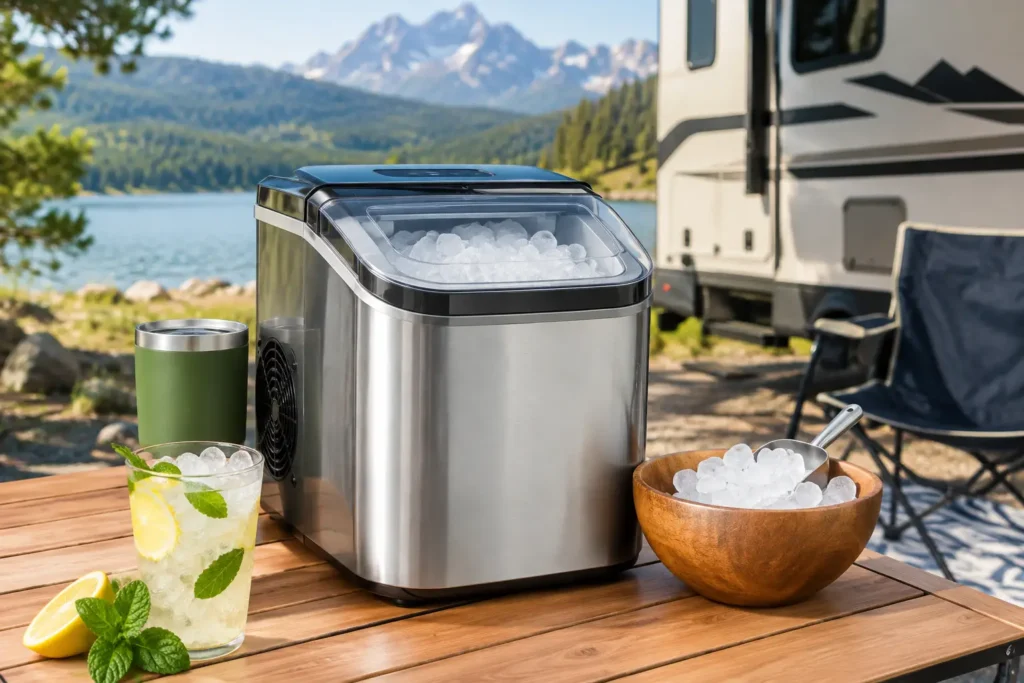
A cold drink after a dusty hike is one of RV life’s small luxuries. Bring a nugget ice maker for RV travel, and that drink gets the soft, chewable pellet ice that cools fast without turning every soda or iced coffee into a watery disappointment. The catch: an RV is not a kitchen counter with wheels. Power limits, water use, heat, vibration, and tiny prep spaces can turn a great home machine into a poor road companion.
For most campers, the best choice is not the machine with the biggest daily production claim. It is the one you can power confidently, fill easily, clean without a project, and secure when the rig is moving.
What Makes a Nugget Ice Maker RV-Friendly?
Countertop nugget machines are generally a better fit than undercounter units for an RV. They do not need a dedicated water line, they can sit on a sturdy section of counter, and you can pack them away when space matters. But countertop does not automatically mean compact. Some premium nugget makers occupy as much room as a small microwave and need several inches of open space around the vents.
Start with the real estate in your galley, not the product photo. Measure width, depth, and height with cabinet doors open, then leave ventilation room on both sides and behind the machine. A maker that technically fits but recirculates hot exhaust into a tight corner will run louder, make ice more slowly, and work harder in summer heat.
Weight matters, too. A full reservoir adds several pounds, and nugget ice makers contain a compressor. Choose a flat, rigid surface near an outlet, not a folding extension counter or a flimsy dinette shelf. Never run the machine while driving. Drain it, dry it, and secure it before moving the RV.
Power comes before production claims
This is the part many buyers skip. Most countertop ice makers use a standard 120V outlet, but their compressor and fan create a meaningful load for a small RV electrical system. Check the wattage on the exact model’s label or manual, then compare it with the capacity of your inverter, shore-power circuit, or generator. Do not assume that a 15-amp outlet means every appliance can run together.
A nugget maker may coexist happily with lights and a phone charger, but pairing it with a microwave, electric kettle, air fryer, or hair dryer can trip a breaker. If you camp with hookups, this is usually manageable. If you boondock, ice becomes a battery-and-generator decision rather than a casual convenience.
The most useful habit is to make ice during generator hours or while connected to shore power. Let the machine fill an insulated cup or cooler, then shut it down. Running it all afternoon from an inverter is possible in some well-equipped rigs, but it is rarely the most efficient use of stored power.
Water capacity is a camping issue
Manufacturers love daily production numbers such as 24, 26, or 30 pounds per day. Those figures are measured under favorable conditions, often with cool water and moderate room temperatures. Inside a sun-warmed RV, output can be lower. More importantly, producing a large quantity of ice requires a large quantity of potable water.
A removable reservoir is the practical winner for RV use. You can fill it from your fresh-water tank, jug, campground spigot, or filtered pitcher without wrestling the machine under a faucet. Look for a reservoir that is easy to see into and easy to drain completely. A little leftover water may not matter in a house, but it is a recipe for stale odors after a travel day.
Use filtered water when possible. It improves taste and reduces mineral buildup, especially if you rotate through campgrounds with very different water quality. If your rig has a decent onboard filter, fill the reservoir from the galley faucet. If not, a separate filtered jug is a simple fix.
The bin does not keep ice frozen
This is the ownership reality that surprises first-time buyers: most countertop nugget ice makers have insulated bins, not freezers. Ice sitting in the bin slowly melts, and the meltwater is recycled to make more ice. That is normal operation, not a defect.
For an RV, it means you should make ice for the day rather than expect the machine to store a weekend’s supply. If you want to stock up before heading to a remote campsite, transfer fresh ice to your RV freezer in small bags or containers. Nugget ice can freeze into a clump, so pack it loosely and expect to break it apart later.
Best Nugget Ice Maker for RV Use by Camping Style
There is no single winner for every rig. The right machine depends on whether your RV is usually parked at full-hookup sites, moving every few days, or operating off-grid.
Best for full-hookup campers: GE Profile Opal
A GE Profile Opal model is the premium pick for RV owners who spend most of their time on shore power and genuinely care about ice texture. It is known for producing satisfying, airy nuggets and offers a more polished experience than basic budget units. Models with side tanks or app features can make daily use more convenient when your machine has a permanent counter spot.
The trade-offs are real: premium pricing, a larger footprint, and more complexity than some campers need. It is best for a Class A, fifth wheel, or travel trailer with generous counter space and dependable hookups. It is harder to justify for a compact camper van or a boondocking-focused setup.
Best for limited counter space: a compact manual model
Smaller nugget makers from brands such as EUHOMY, Silonn, and Kismile can make more sense when every inch counts. The appeal is straightforward: lower upfront cost, basic push-button controls, a removable basket, and less anxiety about packing the unit away between stops.
Expect fewer smart features and, in many cases, more fan noise or a less refined bin design. That does not make them bad RV machines. A simple unit is often the better travel appliance because there is less to configure, less to troubleshoot, and less money tied up in something that gets bounced down the highway.
Before buying, confirm that the listing says it makes nugget, pebble, or chewable ice. Many compact ice makers produce bullet-shaped cubes instead. They are useful, but they do not deliver the soft, crunchable texture most people are chasing.
Best for smart-home features: GoveeLife and similar connected models
A connected nugget maker can be appealing if you like scheduling, status alerts, or checking whether the bin is full from outside the RV. Those features are useful at a campsite with reliable Wi-Fi or when the machine is part of a long-term seasonal setup.
For a touring RV, app control is a bonus, not a deciding factor. Connectivity can be spotty, and no app changes the basics: the machine still needs power, water, airflow, cleaning, and a stable place to sit. Pay for smart features only after the size, output, and power draw fit your rig.
Setup Habits That Protect the Machine
Let a new or recently transported machine sit upright before switching it on. Compressor appliances should not go straight from a tilted cargo bay to full operation. Follow the manufacturer’s timing guidance, especially if it traveled on its side.
Use the included scoop rather than your hands, and keep the lid closed as much as possible in hot weather. The less warm, humid air entering the bin, the less melting and recycling the machine has to manage. If the counter gets direct sun, move the maker or use a shade. An RV can get dramatically hotter than a home kitchen in a matter of minutes.
For travel days, empty the bin, drain the reservoir, and wipe the interior dry. Secure the scoop separately. A machine with even a small amount of water left inside can leak during turns, and standing water can make the next batch smell off.
Cleaning Is Not Optional in an RV
Nugget ice makers need regular cleaning because their wet internal systems are ideal places for mineral scale and biofilm to develop. Campground water can speed up the process. Run the manufacturer-approved cleaning cycle on schedule, rinse thoroughly, and wipe down the bin and scoop often.
If you use the machine every day, inspect it weekly and clean it whenever you notice off flavors, slower production, visible residue, or an unusual smell. For occasional trips, clean and fully dry it before storage, then rinse it again before the next outing. A self-cleaning button helps, but it does not eliminate the need to follow the cleaning instructions.
A nugget maker is worth bringing when cold drinks and chewable ice are part of the trip, not just a novelty you will use once. Choose the machine that fits your power plan and counter space, make a batch while you are settled in, and enjoy the kind of campsite drink that makes everyone ask where the good ice came from.
