Nugget Ice Maker Water Reservoir Capacity
Nugget ice maker water reservoir capacity affects refill frequency, output, and where a countertop machine fits best. Here is how to choose wisely at home.
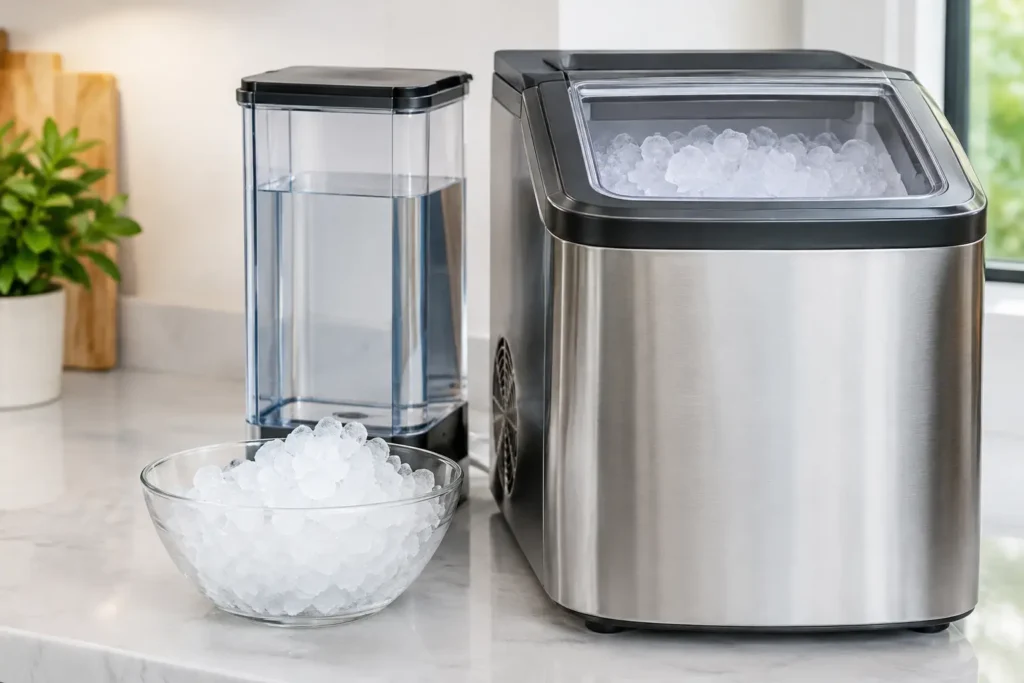
We may earn money or products from the companies mentioned in this post.
A machine can claim 30 pounds of daily nugget ice and still annoy you before lunch if its water tank is too small. Nugget ice maker water reservoir capacity is one of the most overlooked specs in a crowded product listing, yet it determines how often you carry water to the machine, how well it handles guests, and whether its stated output is realistic in your kitchen.
For most countertop nugget ice makers, the reservoir holds roughly 0.5 to 1 gallon of water. That sounds simple, but capacity labels get confusing fast because brands may also list ice-bin capacity, daily production, or a removable side-tank size. Those are different numbers with very different effects on ownership.
What Water Reservoir Capacity Actually Tells You
The reservoir is the supply of water the ice maker can use before it needs a refill. In a standard countertop unit, you pour water into an internal tank, the machine circulates it over chilled components, and the leftover meltwater often returns to that same tank. The process is efficient, but it does not create an endless loop. Every scoop of ice that leaves in a drink takes water out of the system.
A larger reservoir generally means longer stretches between refills. It does not necessarily mean the machine makes better ice, runs quieter, or stores more finished ice. Think of it as convenience capacity, not performance capacity.
This distinction matters because nugget ice machines use water steadily. Their soft, porous pellets are a pleasure in soda, iced coffee, and cocktails, but they also melt faster than dense cubes. If your household fills insulated tumblers all day, you will use more water and empty the reservoir sooner than the manual’s best-case math suggests.
Reservoir Capacity vs. Ice Bin Capacity
Do not confuse a water reservoir with an ice bin. The reservoir holds liquid water waiting to be made into ice. The bin holds finished nugget ice waiting to be scooped.
Most countertop bins are insulated but not refrigerated. That is a major trade-off of compact nugget machines. When the bin fills, the machine pauses. As ice melts, the water drains back into the reservoir and production resumes. This is practical for daily use, but it means a large bin is not freezer storage. If you make a full batch in the morning and ignore it until evening, expect wetter ice and less remaining volume.
A model with a 3-pound ice bin and a 0.6-gallon reservoir may look generously sized on paper. In practice, the bin can reach its sensor limit long before the reservoir is empty. For a party, you will still need to scoop ice into a freezer or cooler as it is made if you want the machine to keep producing at full speed.
How Much Capacity Do Most Homes Need?
For one or two people who want nugget ice for a few drinks each day, a typical 0.5- to 0.7-gallon internal reservoir is usually enough. You may refill it once a day, sometimes less if meltwater cycles back into the tank and you are not draining the bin constantly.
For a family, a home office with several regular users, or a household that treats pebble ice like a food group, aim closer to 0.8 gallon or more. That extra volume will not turn a countertop model into a commercial unit, but it reduces the nuisance factor. A machine that needs water every few hours is far less likely to stay on your counter year-round.
Entertainers should prioritize a larger tank, a larger bin, and strong hourly production together. Daily output claims can be misleading for a Saturday gathering. A machine rated for 24 to 30 pounds per day may make only a pound or two per hour under normal room-temperature conditions. Start it early, keep the reservoir topped up, and move finished ice to a freezer or insulated cooler as you go.
For RVs, apartments, and small kitchens, a smaller reservoir can be the right compromise. Less water means less weight to move when cleaning and a smaller footprint overall. Just be honest about the refill routine. Convenience is not only about capacity. It is also about whether you can reach the sink, lift the lid easily, and see the water level without playing guesswork.
The Best Nugget Ice Maker Water Reservoir Capacity by Use Case
A 0.5- to 0.7-gallon reservoir is best for casual personal use. This is the common sweet spot on affordable countertop machines: compact, easy to fill, and sufficient for a couple of tumblers if you keep up with it.
A 0.8- to 1-gallon reservoir is best for families and frequent iced-drink households. It gives you more breathing room through breakfast, school pickups, and evening drinks without making refill alerts a daily irritation.
An external side tank is best for people who hate refilling. Premium machines, including certain GE Profile Opal configurations, may support a larger add-on reservoir. This can push available water well beyond what an internal tank alone holds. It is genuinely useful, but it takes counter space and costs more than a basic machine. It is a convenience upgrade, not a requirement for great chewable ice.
A plumbed machine is best for serious volume. Undercounter and commercial models from brands such as Scotsman and Hoshizaki connect to a water line, removing manual refills entirely. They also cost more, need installation space, and require more disciplined cleaning. Buy one because you have sustained demand, not because a countertop refill offended you once.
Why Bigger Is Not Always Better
The obvious answer is to buy the largest reservoir available. Sometimes that works. Sometimes it creates extra maintenance.
Water that sits in a warm countertop reservoir can develop off flavors, mineral buildup, or slimy biofilm if you are not using and cleaning the machine regularly. A larger tank is ideal when you make ice often. If you only run your machine on weekends, filling a huge reservoir and letting water sit for days is not a win.
Bigger reservoirs can also make a machine heavier and harder to maneuver for cleaning. Since nugget ice makers need periodic descaling and internal rinsing, you should not choose a model that is miserable to move, drain, or dry out. The best capacity is the one that matches your actual consumption and maintenance habits.
Capacity Claims Need a Reality Check
When comparing models, look for the internal reservoir size in the manual or specifications, not just a marketing image of a large water tank. If the number is missing, that is worth noticing. Brands are happy to publish a big daily production claim; a vague reservoir spec often means refills will be more frequent than you expect.
Also account for conditions. Hot rooms, warm tap water, mineral-heavy water, and frequent lid opening can all reduce practical output. A machine may need more time to make each batch, and you may consume melted water or discard ice faster than expected. Filtered water can improve taste and reduce scale, but it does not eliminate cleaning.
Our rule of thumb: do not judge capacity by the number of drinks you imagine making. Judge it by the moments you do not want to stop and refill. If that moment is a quiet afternoon at your desk, most machines are fine. If it is halfway through a backyard party, choose a larger tank, an external reservoir, or a plumbed setup.
Cleaning Changes the Capacity Conversation
Every reservoir, large or small, needs fresh water and regular cleaning. Empty standing water when you will not use the machine for several days. Run the manufacturer-recommended cleaning cycle on schedule, descale based on your water hardness and usage, and dry the reservoir before storing the machine.
Do not keep topping off old water indefinitely. Meltwater recirculation is useful during normal operation, but it is not a substitute for replacing water and cleaning the system. If your ice starts smelling odd, looking cloudy, or tasting flat, clean the machine before blaming the ice maker itself.
A Quick Buying Checklist
Before you buy, confirm four things: the internal reservoir size, whether an external tank is included or optional, the ice-bin capacity, and whether the bin is refrigerated. Then compare those details with your real routine, not the manufacturer’s maximum daily output claim.
The best countertop nugget ice maker is not necessarily the one with the biggest number on its spec sheet. It is the one that keeps a glass of soft, crunchy ice ready without turning every other drink into a refill-and-cleaning chore.
