Why Your Nugget Ice Maker Bin Melts So Fast
Learn why ice melts in a nugget ice maker bin, which storage and ventilation limits are normal, and practical ways to get more usable ice.
We may earn money or products from the companies mentioned in this post.
That fresh basket of soft, chewable ice can look disappointingly smaller an hour later, especially when you expected your new machine to work like a freezer. If you are asking why nugget ice maker bin melts, the short answer is that most countertop nugget makers produce ice but do not freeze or actively refrigerate the storage bin.
That is normal behavior, not automatically a defect. It is also one of the biggest ownership realities shoppers miss when comparing a 26-pound-per-day countertop machine with a true undercounter or commercial unit. Nugget ice makers are designed to make a steady supply of ice for immediate use. They are not designed to hold a full bin of ice overnight.
Why a Nugget Ice Maker Bin Melts
A countertop nugget ice maker has two separate jobs: freeze water into nugget ice, then move that ice into a collection basket or bin. The first job requires a refrigeration system. The second usually does not.
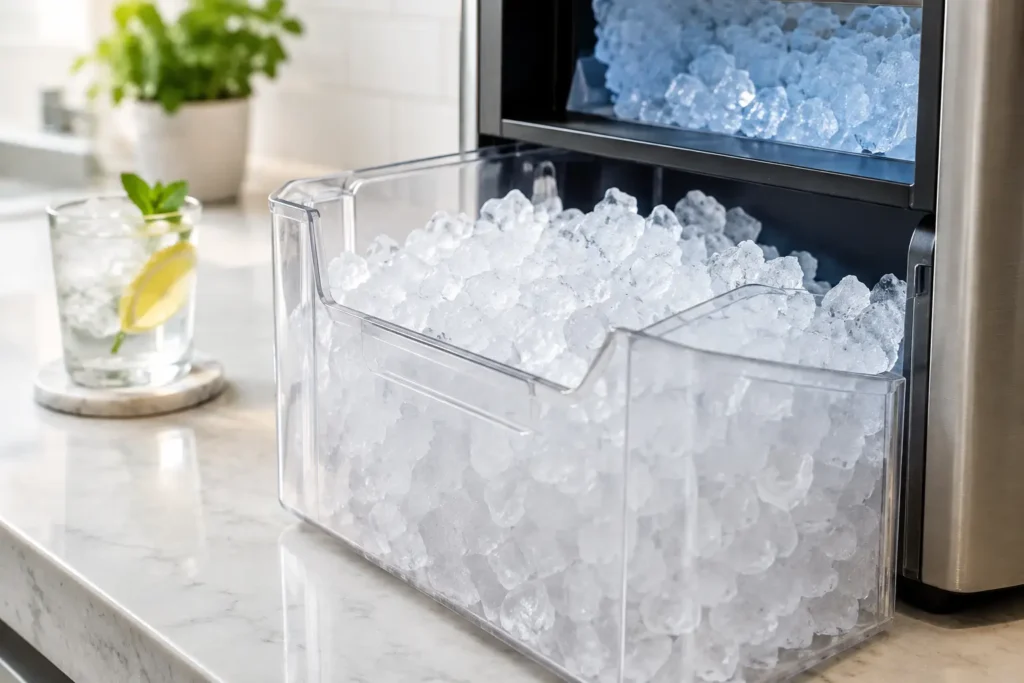
On most home countertop machines, the bin is insulated to slow melting, but it is not a freezer compartment. There are no cold evaporator coils actively maintaining the bin below 32°F. As the ice sits, warm kitchen air and heat from the machine gradually win. Meltwater drains back into the reservoir, where the machine may use it to make more ice.
That recirculation is intentional. It reduces water waste and keeps the appliance compact. But it also means the number on a product listing, such as “up to 30 pounds per day,” is a production figure, not a promise that the bin will hold 30 pounds of ice at once.
Nugget ice melts faster than large cubes for another simple reason: surface area. Each little pellet has far more exposed surface than a big restaurant-style cube. That is why nugget ice chills a drink quickly, absorbs flavor so well, and delivers that satisfying chew. It is also why it softens and shrinks faster in a room-temperature bin.
The machine may be making ice while the old ice melts
This is the part that confuses many first-time owners. You can hear the machine running, see fresh pellets dropping, and still notice the bin level barely rising. In a warm room, the machine may be replacing melting ice rather than building a larger stash.
That does not necessarily mean it is underperforming. A countertop model can still reach its rated daily output over repeated cycles, even if its usable bin capacity is only 2 to 3 pounds. The bin is a serving reservoir, not long-term storage.
What Is Normal Melting and What Is Not?
Some melting is expected. A lot depends on your kitchen temperature, humidity, lid-open habits, and how often people scoop ice. A machine sitting beside a sunny window or a heat-producing espresso maker will lose ice much faster than the same model in a 70°F kitchen.
Normal signs include damp nuggets, some water at the bottom of the reservoir, and a bin that gradually reduces after production stops. It is also normal for the machine to pause when the ice basket reaches its sensor, then restart after enough ice melts or is removed.
Less normal behavior deserves a closer look. If newly made ice turns into mostly water within a short period in a cool room, if the appliance cannot make a full basket after several hours, or if the nuggets emerge unusually wet and slushy, something may be off. Poor airflow, a dirty condenser, scale buildup, an incorrect water temperature, or a developing refrigeration problem can all reduce output.
A useful real-world test is to fill the bin, close the lid, and leave the machine in a reasonably cool room for one hour without opening it. You should see some softening and modest melting, not a near-empty basket of water. Exact results vary by model, so judge the change over several cycles rather than one batch.
The Factors That Make Nugget Ice Melt Faster
Warm rooms and poor ventilation
Countertop ice makers need breathing room. When the rear or side vents are crowded against a wall, cabinet, or other appliance, the machine cannot shed heat efficiently. That raises internal temperatures, slows ice production, and makes the storage area warmer.
Give the unit the clearance specified in its manual. As a practical rule, do not wedge it tightly into a shelf, RV cubby, or crowded bar cart. If the sides feel unusually hot, move it away from direct sunlight and nearby heat sources.
A full bin is not a frozen bin
The fuller the bin, the more dramatic the eventual melt can look. The machine stops producing when its ice-full sensor is blocked. Then the stored ice begins to melt slowly from the outside. As pellets settle and compact, they can also look like they have disappeared faster than they actually have.
For a party, do not wait for the bin to become a long-term ice bank. Start the machine early, transfer finished ice to your freezer, and let it keep producing. If you need pounds of ice available all at once, this is the best workaround for a countertop machine.
Warm water and frequent lid opening
Cold, filtered water generally helps a nugget ice maker reach a stable rhythm faster. Starting with hot tap water gives the refrigeration system more heat to remove. It will not turn a marginal machine into a great one, but it can improve the time to first ice and reduce strain during hot weather.
Opening the lid repeatedly also lets in warm, humid air. That is especially noticeable in busy kitchens, home bars, and offices where everyone wants a scoop. Keep the lid closed between uses, and use the included scoop instead of reaching into the bin.
Scale and residue
Mineral scale acts like a performance tax. It can interfere with water flow and heat transfer, causing slower cycles and wetter ice. Slime or residue from infrequent cleaning can create similar issues, plus unpleasant odors.
If your machine used to keep up and now seems to melt more than it makes, clean it before assuming the compressor has failed. For many households, a cleaning cycle every one to two weeks is realistic. Hard-water homes and high-use households may need it more often. Follow the maker’s approved cleaning instructions, then run rinse cycles until no cleaner remains.
How to Get More Usable Ice From Your Machine
The best strategy is to match your habits to the appliance design. Countertop nugget makers are excellent for day-to-day drinks, family dinners, and small gatherings where people use ice as it is made. They are less ideal for storing a party-sized reserve in the onboard bin.
For the most ice with the least frustration, place the machine in a cool, ventilated location; fill it with cold filtered water; keep the lid closed; and transfer extra ice to a freezer-safe container once the bin is full. Break up clumps before freezing, then give the ice a few minutes at room temperature before serving if it hardens together.
If you regularly host 15 people, fill large coolers, or want ice available all day without babysitting the basket, consider a higher-output undercounter model. Some premium residential and commercial machines have insulated storage bins with more capacity, but even those bins are often not true freezers. The key difference is output, storage volume, drainage, and duty cycle – not necessarily frozen storage.
Does a Melting Bin Mean You Bought the Wrong Ice Maker?
Not always. It means you need the right expectation. A compact machine that produces fresh nugget ice every few minutes can be a great fit for an apartment, office, RV, or kitchen counter. Its trade-off is that it asks you to use or transfer ice rather than stockpile it.
At NuggetLab, we treat bin design as a major buying factor because it changes the ownership experience as much as daily production claims. A 38-pound-per-day model can still feel disappointing if its small, uncooled basket does not match your entertaining routine. Conversely, a lower-output unit can feel perfect for two people who want fresh ice for iced coffee and evening drinks.
The practical takeaway: let your machine make the ice, let your freezer store the surplus, and judge performance by how well it keeps up with your actual demand. Soft nugget ice was made to be enjoyed fresh, preferably in a cold drink before it has a chance to melt.
